Back

Case studies should be viewed in bigger screens for now

Back

Case studies should be viewed in bigger screens for now

Back

TBC Bank: Solving physical problems with digital solutions

TBC Bank’s - QR Cash-Out. it’s a Mobile app feature that lets users withdraw cash from ATMs using only their phone, scanning a QR code instead of inserting a physical card.

App name

TBC

My role

Product designer

Platform

iOS / Android
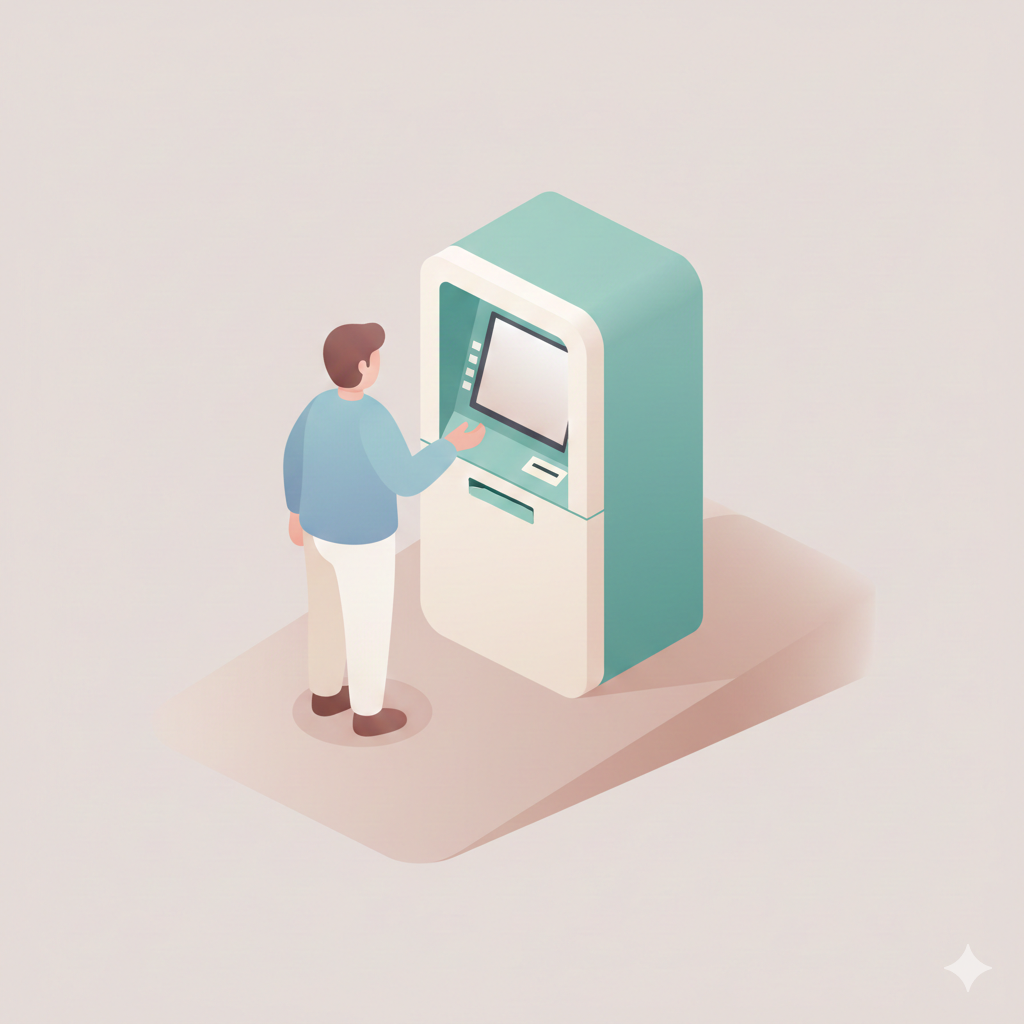
Overview

The Challenge

TBC’s QR Cash-Out was already live, enabling users to withdraw cash without a physical card. Yet adoption remained low—most users weren’t aware of the feature, and those who did often encountered real/digital-world friction.


My challenge was to understand why a feature designed for convenience wasn’t performing as expected, identify the barriers across both the physical and digital touchpoints, and redesign the experience to make cash-out more intuitive, visible, and usable in real conditions.
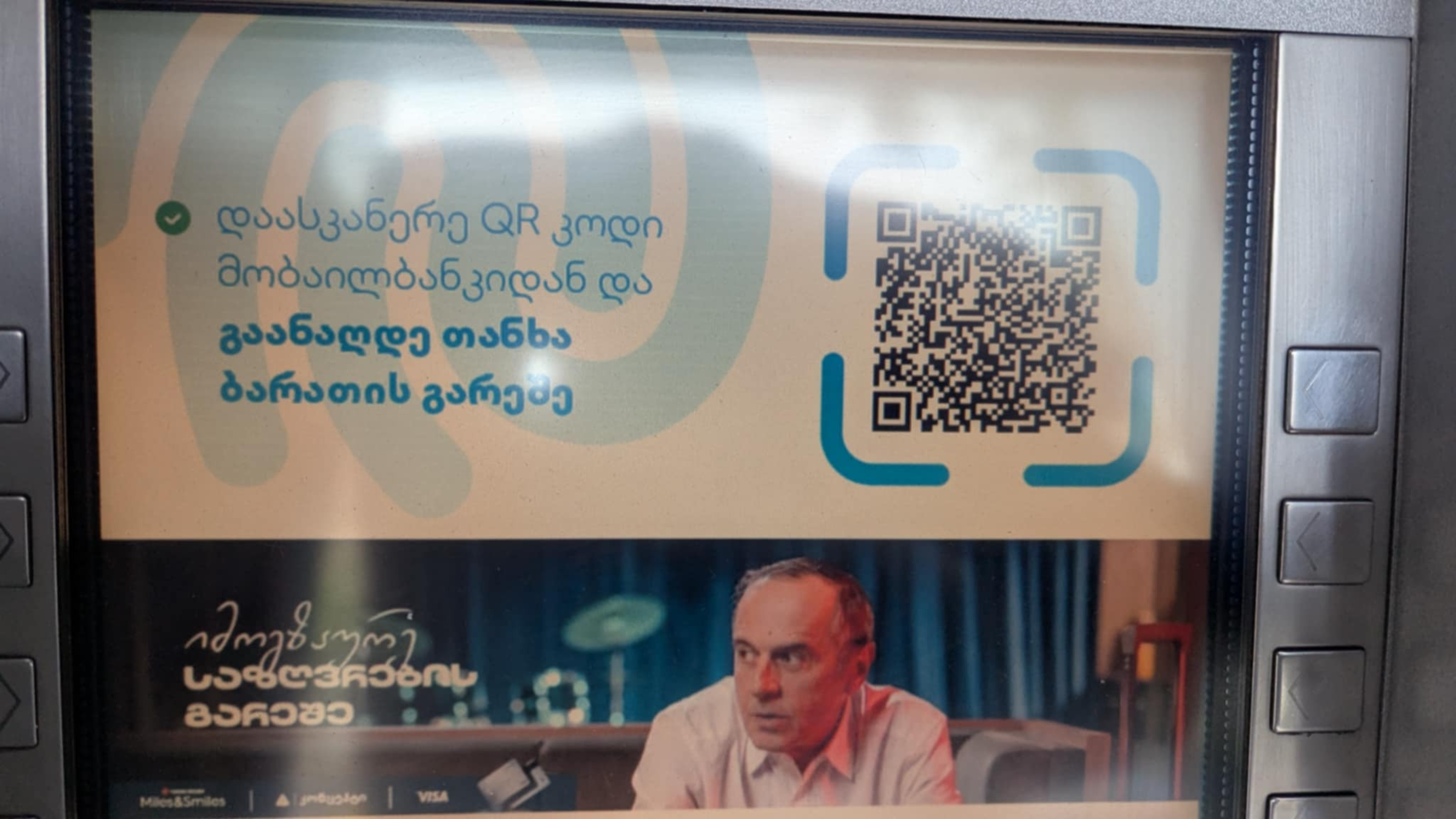
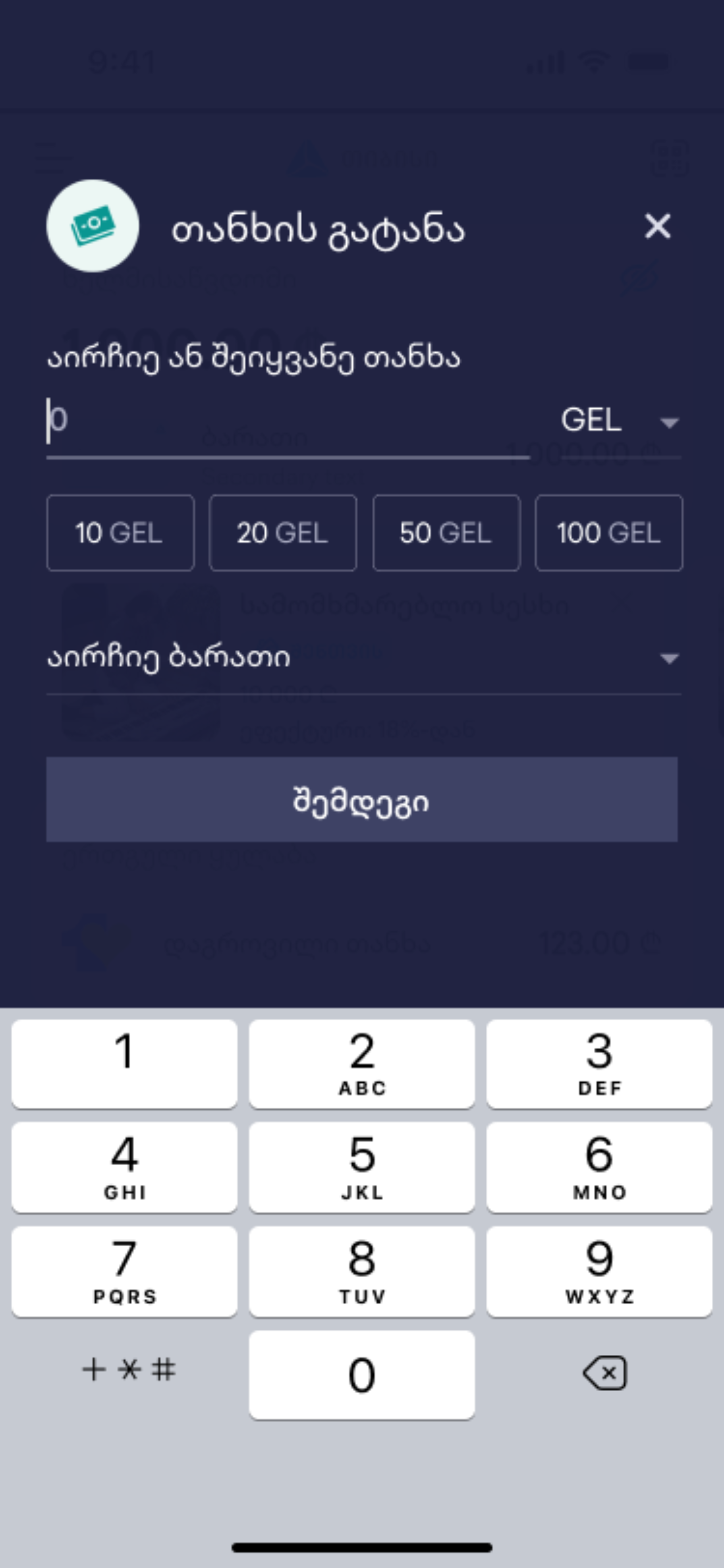
ATM and User interaction

Identifying the problems

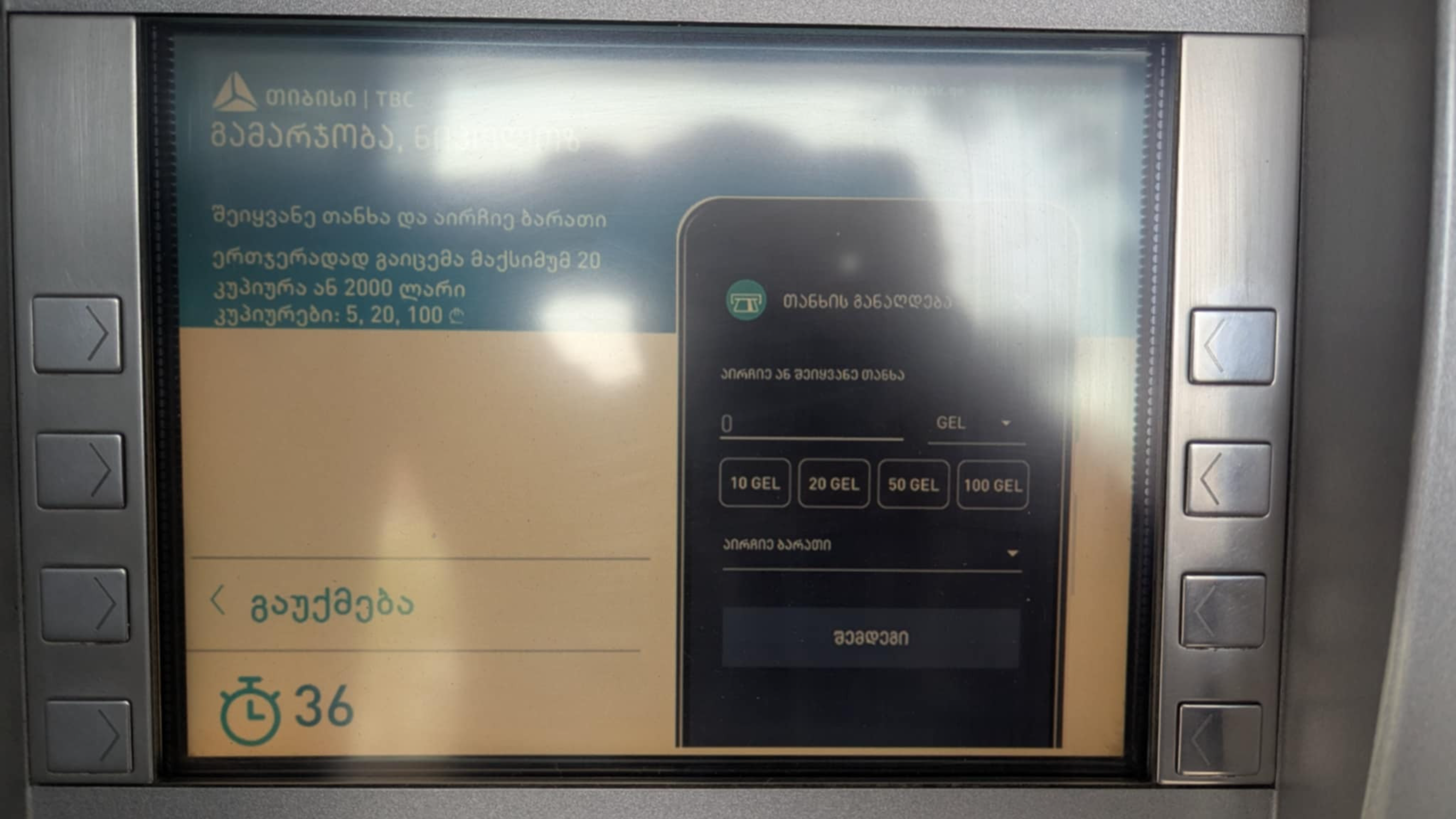
This is my shadow reflecting on the screen

Trying to cover the screen from the sun to take a picture

This is one of the major problems that we found out users faced during this journey. Most of the ATMs are in the streets and during a day it’s nearly impossible to scan with smartphone

Comparing the Back & Front

It’s interesting what’s going on the ATM screen during a cash-out process, where user is fully focused on Mobile and not ATM.

  • There’s a timer on ATM = You have a certain amount on cashing out. Which is nowhere to be seen on the mobile app, where user is actually doing stuff
  • ATM mentions which bills are available, for example: only 20$ and 50$ -s. Which might be essential for a certain users and their needs. There’s also no error code if I put the incorrect bill order.

Research

Qualitative & Quantitative

During discovery, initial UX audit revealed critical usability issues, particularly around feature visibility and user flows. However, to improve adoption and uncover deeper behavioral problems, we conducted both qualitative and quantitative research.

Results

The feature struggled to gain traction largely due to discoverability issues. Users overlooked entry points, and many did not realize QR Cash-Out was available at all.


Aside from discoverability, Those who did encountered friction during process, Couldn’t full-fill the cash-out page because of elements/components discovery and making errors before they could cash out.

Consistent feedback theme involved real-world scanning conditions: outdoor ATMs exposed to sunlight or glare made it harder to capture the QR code, creating an additional layer of friction.

Idea that could benefit Adoption

Idea that could benefit Adoption

During user interviews and withdrawal pattern analysis, we identified a critical gap between user needs and ATM capabilities.

Our Research Findings:


  • 68% of ATM withdrawals are under $100
  • 73% of users prefer receiving smaller denominations ($5, $10, $20 bills)
  • Users cited specific use cases: tipping, splitting expenses, public transport, small vendors
  • Current ATMs typically dispense larger bills by default, forcing users to break them elsewhere


The Problem: Users withdraw round amounts (e.g., $100) but immediately need to split them into smaller bills, creating extra friction and reducing the convenience that ATMs should provide.

The Opportunity: By offering a simple "smaller bills" option, we eliminate this post-withdrawal friction and deliver cash in the format users actually need.

These findings helped us reframe QR Cash-Out not just as a digital ATM replacement, but as a real-world experience shaped by environment, context, and user habits.
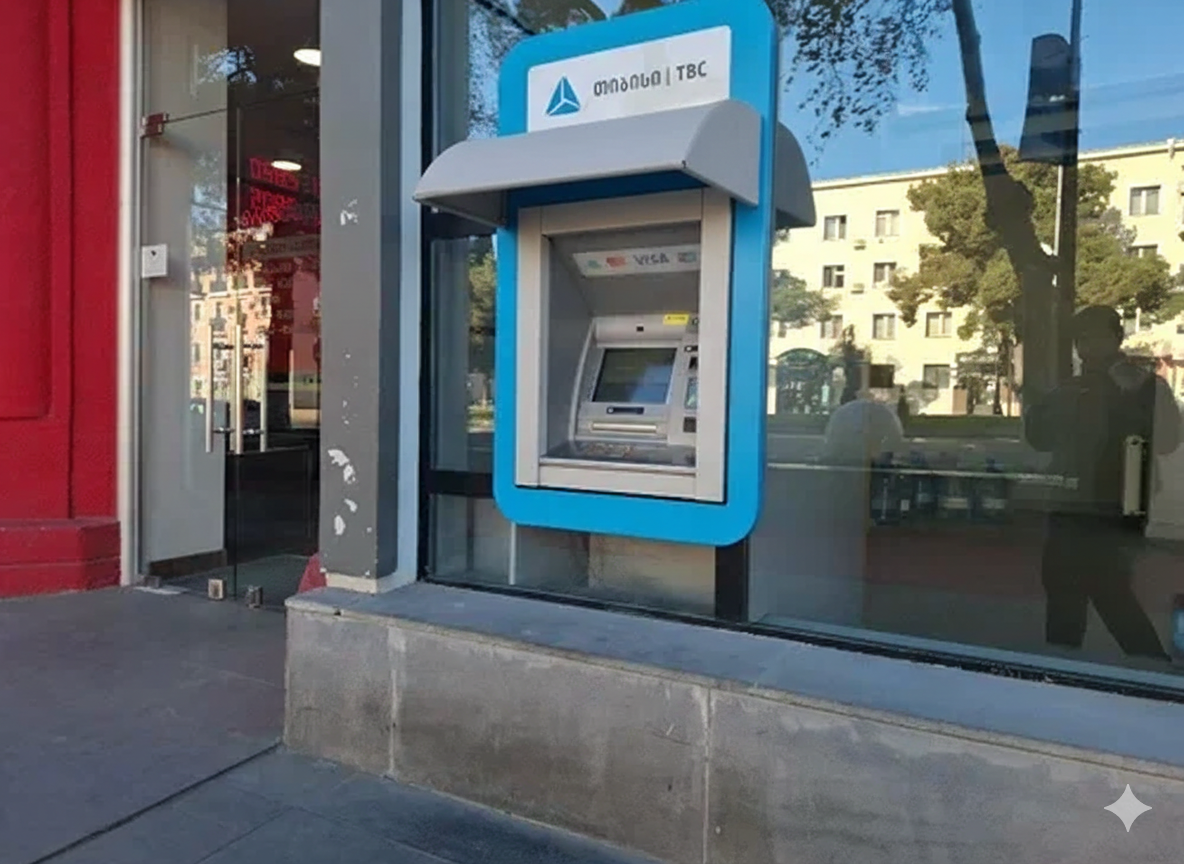
Design

Solving problems & Implementing new features

Sunny-day problems on ATM

Prior to the redesign project, the bank attempted to address this issue by installing physical "sun shades" on ATMs. However, this solution was only implemented on 5% of ATMs nationwide.


This approach proved neither scalable nor cost-effective. The shades didn't consistently solve the visibility problem across different locations and times of day. Rolling out this hardware solution to every ATM would require significant investment and an extensive timeline, making it impractical as a long-term fix.

Marketing Message Placeholder

Scan QR code from the App and cash-out without a card

or type

4

6

2

3

I came up with Digital solution

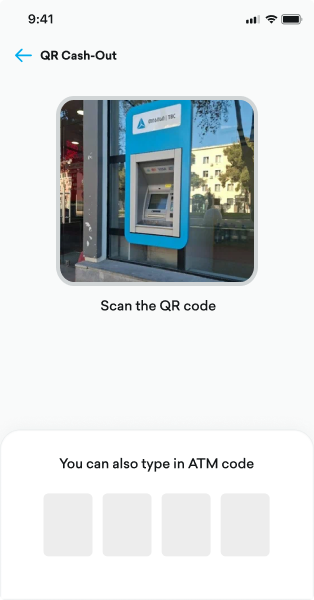
I proposed generating a 4-digit code alongside the QR code, offering users a reliable alternative for cash withdrawal. The insight came from observing that during sunlight glare, users can't see the large ATM screen clearly, but they can still read their phone screen—where they're actually completing the transaction.


Since a QR code is essentially encoded session data that generates uniquely for each transaction, implementing a parallel 4-digit code system required minimal development effort. Both methods reference the same session token, giving users flexibility without adding technical complexity.


This approach directly addresses the environmental friction of outdoor ATM usage while leveraging existing infrastructure.

Redesigned the Cash-out page

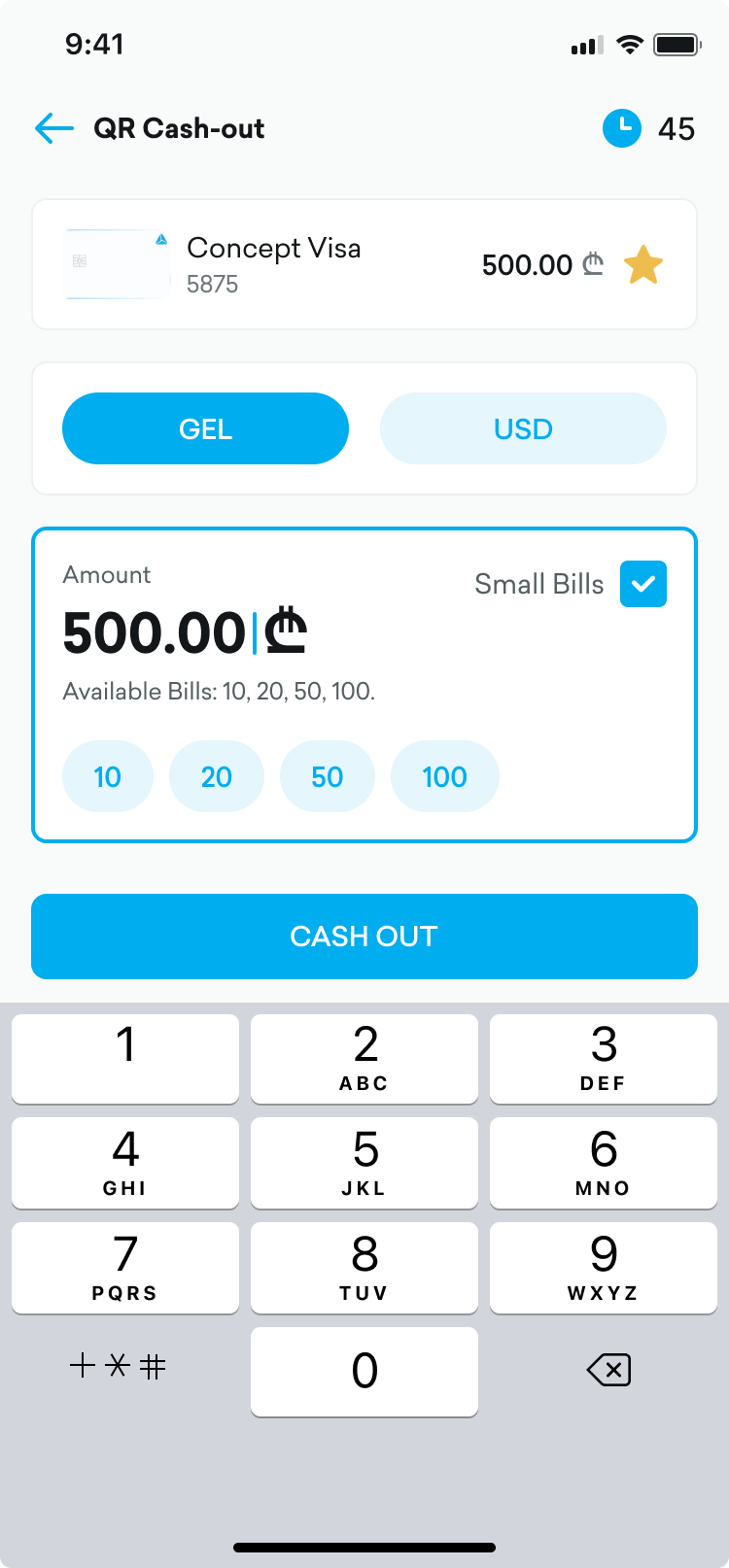
  • Added mobile timer - Previously, the countdown timer was only visible on the ATM screen, not where users were actually focused. I added a dynamic timer to the mobile interface that adapts its display as time runs out, keeping users aware of their transaction window.
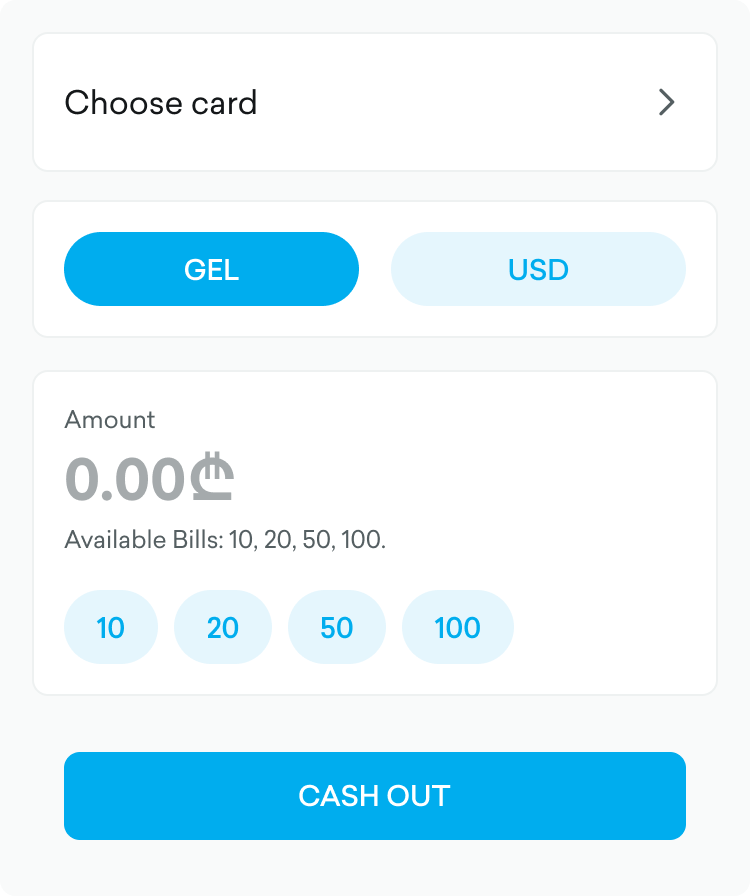
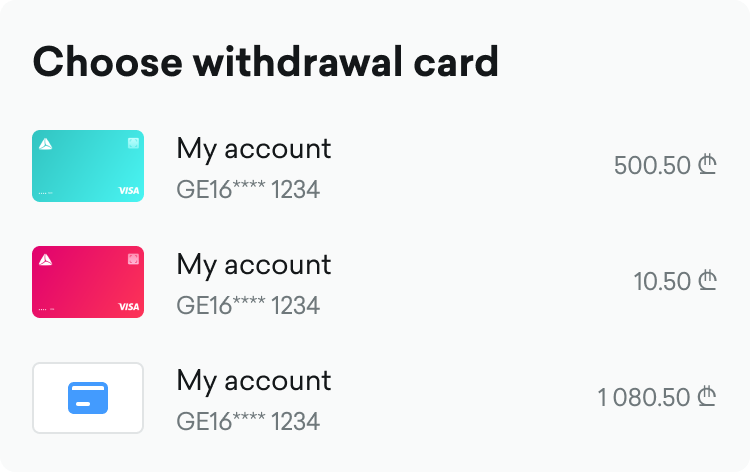
  • Visible card selection - When entering an amount, users need to see which card they're withdrawing from. In some cases, users need to withdraw the exact balance available on a specific card. I made card selection prominent and persistent throughout the flow.
  • Simplified currency selection - The previous dropdown was cumbersome for just two currency options (GEL/USD or GEL/EUR). I replaced it with a clear toggle button that makes the binary choice immediately obvious and easier to tap.
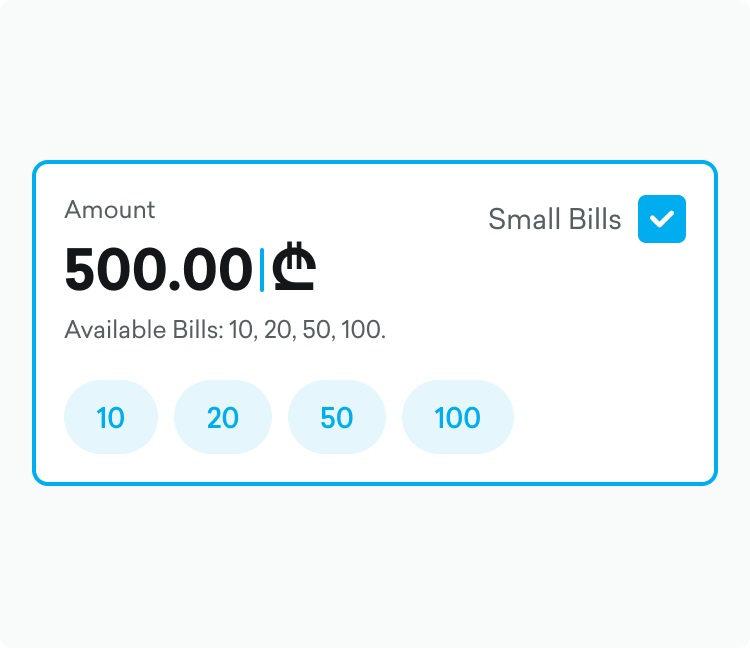
  • Added available bills for them to see, Which combination of amount they are able to cash

The Smaller Bills Feature: Choosing Simplicity Over Control

The Challenge: Users wanted flexibility in which bills they received, but manual selection was risky.


What We Anticipated: A user selects bills totaling $90, with $10 remaining - but the ATM is out of $10 and $5 bills. They're stuck in a dead-end. This constraint satisfaction problem would require complex logic to prevent, adding confusing disabled states and hidden rules.

The Solution: One checkbox: "Do you want smaller bills?"


Why This Works:

  • No dead-ends - system guarantees valid combinations
  • No mental math at the ATM
  • Faster than building combinations manually
  • Users trust us to optimize behind the scenes


The Principle: Good UX isn't about maximum control - it's about the right amount of control at the right time.

Smart erroring system

Scenario one → ATM has limited bills, $5 bills have run out, and user orders $65 - which in combination, needs at least one $5. Instead of standard error highlights, I offer user a solution - nearest two alternatives to their need.


Time is essential for our user. They have a timer on cashing out and I prioritized possible negative outcomes and where they might be spending time.

Amount

65.00

$

Available Bills: 10, 20, 50, 100.

10

20

50

100

Amount not available

We can’t make exactly $65 with our current bills

Choose Alternative

$ 60

$ 70

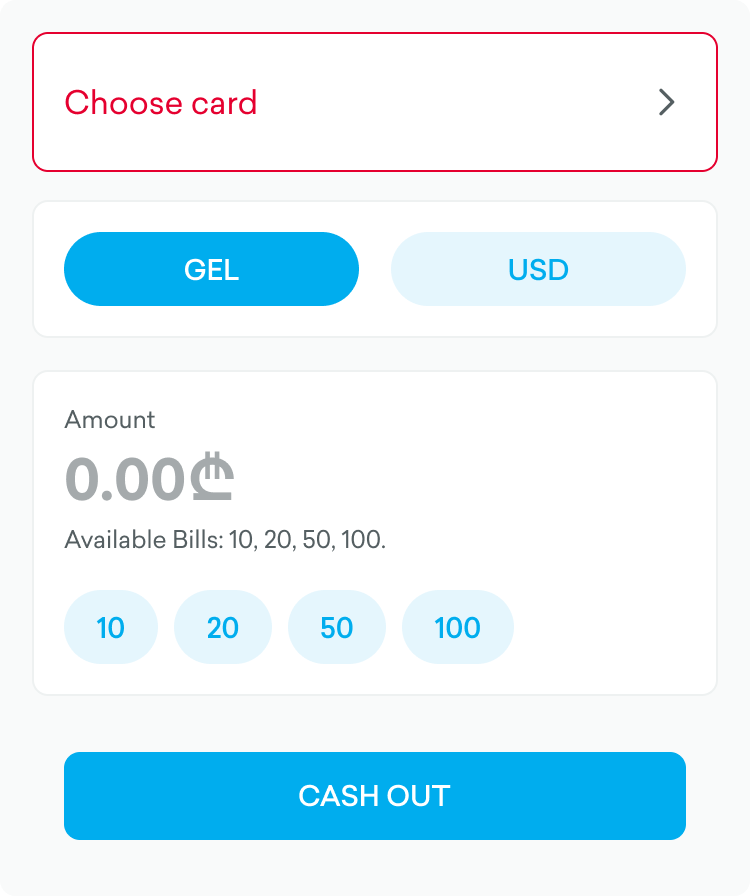
Scenario two → We have a functional of favorite cards in the APP, But if user has no favorite, Choice of withdrawal card input will be empty. We have always active CTT, if they miss adding a card and hit the button, They will go straight to the Card choice, instead of error → Card choice


Even little matters :)

1

3

Thank you

Home Page